

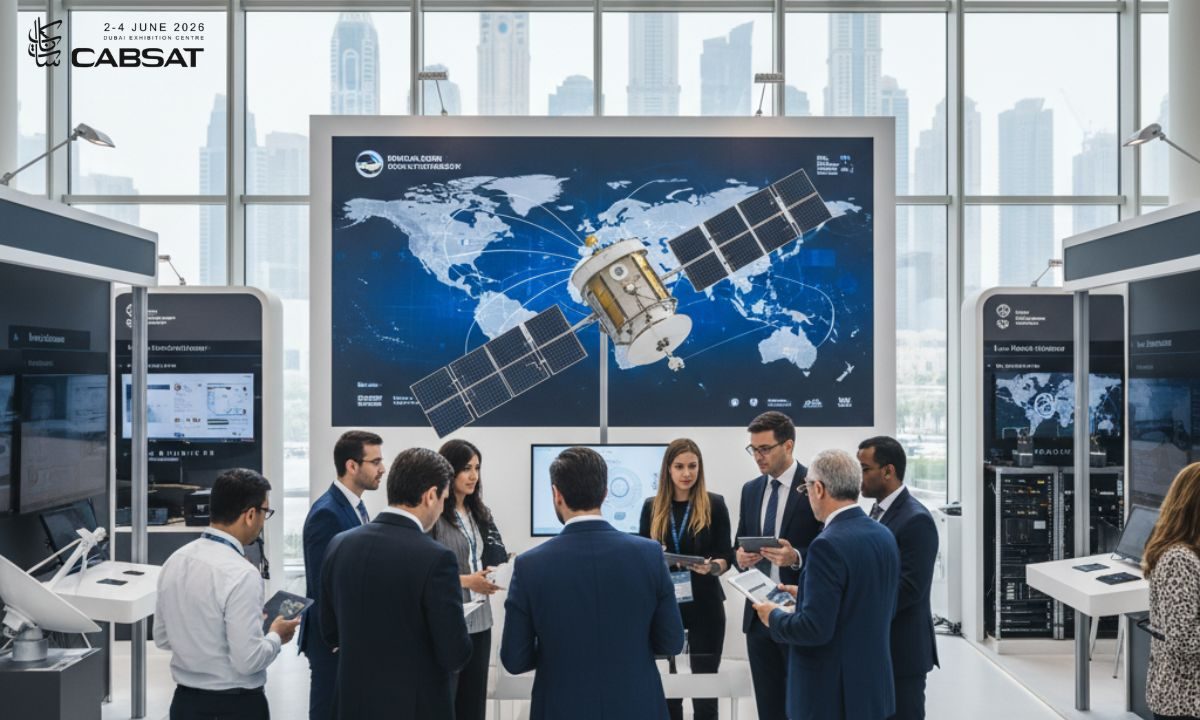
Hype says machines will replace creative workflows. Reality in the UAE shows something subtler. The decisive gains appear where artificial intelligence quietly amplifies audiovisual teams and shortens feedback loops. This focuses on what already works, where the edge is emerging, and how you can prepare for the next 12 months. It is a pragmatic view of AI in AV Industry progress, not a promise of miracles.
Top AI-Powered AV Solutions Transforming UAE Industries in 2026
1. AI-Driven Voice Synthesis and Speech Generation
Voice models now produce presenter-grade audio for training, signage, and broadcast fills. You may have seen editors replace late script pickups with lifelike synthetic reads. Turnaround drops from days to hours.
- Brand consistency improves through reusable voice profiles and pronunciation dictionaries.
- Multilingual outputs help content scale across Arabic and English markets.
- Compliance teams gain logs of every take, which aids audit and approvals.
Here is why this matters for AI in AV Industry teams in the UAE. Studio time is finite and expensive. Synthetic voices reduce reshoots and keep your schedules intact.
2. Intelligent Content Management Systems
Modern CMS platforms classify, trim, caption, and version content automatically. It is basically an assistant editor wired into storage. Search improves because assets carry structured, scene-level metadata.
- Auto-tagging identifies speakers, logos, and locations for quick reuse.
- Approval workflows surface only high-risk edits to humans.
- Retention policies archive variants while preserving canonical masters.
For AI in AV Industry operations, the payoff is faster retrieval and fewer duplicate edits. Less chasing, more shipping.
3. Real-Time Language Processing and Translation
Live captioning and translation tools now handle Arabic-English switching with credible accuracy, though not without exceptions. Latency keeps dropping, which is critical for your events.
- Bidirectional subtitles help mixed audiences follow complex panels.
- Glossaries lock domain terms to preferred translations.
- Auto-redaction hides sensitive names in real time for compliance.
In practice, this brings AI in AV Industry accessibility into mainstream programming. Fewer barriers, wider reach.
4. Automated Camera Tracking and Speaker Recognition
PTZ cameras now follow speakers, not just motion. Face and voice cues combine for reliable framing in hybrid rooms. Production looks intentional, even with lean crews.
- Speaker handover triggers swift angle changes and lower thirds.
- Camera presets adapt to predicted movement patterns on stage.
- Fallback logic holds a safe wide shot if confidence dips.
AI in AV Industry deployment here cuts operator load and removes jittery pans. Small detail. Big polish.
Recent launches at CABSAT demonstrate how this technology is already reaching the market.
5. Predictive Analytics for Audience Engagement
Engagement models forecast drop-off, topic heat, and optimal clip length. They do not replace editorial judgement. They make yours sharper.
- Producers see attention forecasts before locking the running order.
- Editors test alternative cold opens and choose the strongest hook.
- Marketers time releases to match local viewing peaks.
For AI in AV Industry planning, this shifts reviews from opinion to evidence. Your decisions speed up. Outcomes improve.
6. Smart Room Control and Environmental Adaptation
Rooms now sense occupancy, noise, and ambient light. Systems auto-tune audio EQ, mic pickup, and screen brightness. No operator intervention needed.
- Acoustic models reduce echo and cross-talk in glass-heavy spaces.
- Thermal cameras help seat allocation for dense sessions.
- Energy settings adjust around booking patterns to save cost.
AI in AV Industry facilities benefit twice: better experience and lower operating expense. That is a rare combination.
Revolutionary Applications Reshaping UAE's Digital Economy
AI-Powered Digital Signage and Dynamic Content
Dynamic signage now adapts to context: time, traffic flow, and store inventory. Content swaps in seconds and aligns with what is actually in stock.
- Face-blurred, privacy-safe analytics estimate group demographics.
- Creative variants rotate based on dwell time and pathing.
- A/B tests run continuously and retire underperforming scenes.
In the AI in the AV Industry, this is where revenue meets pixels. Relevance drives lift. Waste declines.
Voice Cloning for Media Production
Ethical voice cloning under consent simplifies reshoots and localisation. A showrunner can approve Arabic and English cuts in parallel without studio bookings.
Quick example: consider a training series that needed late compliance lines in two languages. Both can be generated in one afternoon, matched to the original tone. Your schedule holds. Cost does not spike.
Immersive LED Walls with AI Integration
LED volumes paired with scene synthesis compress location work. AI maps light, parallax, and colour to keep talent integrated with the background. Less green spill. More realism.
- Look-up tables maintain continuity across shots and days.
- Generative plates create safe extras for crowd scenes.
- Colour management tightens across camera bodies and lenses.
This is AI in AV Industry craft, not spectacle. It saves your resets and protects continuity.
Virtual Production Studios Using AI
Virtual studios automate set dressing, camera paths, and lighting cues. Directors iterate on blocking faster because the scene responds in near real time.
- Previs becomes production-ready with fewer rebuilds.
- Physics assists put props and shadows where they belong.
- Shot lists align with budget, not wishful thinking.
And yet, human taste remains decisive. AI proposes. Your director disposes.
Automated Event Management Systems
Registration, session routing, captioning, and highlight reels now link through one data spine. The system knows who attended, what they watched, and where to cut sizzle clips.
- Routing reduces bottlenecks at popular stages through gentle nudges.
- Post-event content ships within 24 hours, not a week later.
- Vendors receive clear briefs tied to actual attendee behaviour.
This is where AI in AV Industry applications prove commercial value. Less friction, more measurable impact.
Must-Attend AI in AV Industry Events 2026
1. AI Everything Abu Dhabi (May 11–13)
You should treat this as a systems event. Expect strong content on orchestration, compliance, and enterprise-grade deployments. It is a good venue to validate your roadmaps and supplier claims.
- Focus: cross-industry AI in AV Industry integration and policy.
- Value: enterprise case reviews and vendor vetting.
2. Global AI Show Abu Dhabi (October 27–28)
This show skews innovation-forward. Demos often highlight model-assisted production and analytics for media and events. Take prototypes seriously, but test your assumptions.
- Focus: applied models and real-time media tooling.
- Value: partner discovery and pilot ideas.
3. Dubai AI Week and Summit
Dubai AI Week pulls public and private leaders together. For AI in AV Industry events 2026, it provides context on regulation and municipal adoption. Useful for your long-horizon planning.
- Focus: policy, infrastructure, and city-scale use cases.
- Value: alignment with UAE digital priorities.
4. TechNext AI Summit Dubai (November 5)
TechNext concentrates on practitioner talks. Look for engineering deep dives on streaming, room automation, and low-latency capture. The hallway track is excellent.
- Focus: technical design patterns and integration tips.
- Value: blueprints for pilots and quick wins.
5. GITEX Global 2026 (October)
GITEX remains the broadest showcase. For the AI in AV Industry crowd, it offers supplier breadth and government presence. Plan your meetings early. The scale is overwhelming.
- Focus: end-to-end stacks and platform bets.
- Value: procurement groundwork and ecosystem mapping.
If you track AI in AV Industry trends 2026, these gatherings form your practical shortlist. Attend with clear questions and a short list of outcomes.
The Future of AI in AV Industry UAE
Three shifts will define the next cycle for the AI in the AV Industry in the UAE. Each is already visible in early pilots. The pace will likely accelerate as budgets move from trials to lines of business.
| Shift | Practical implication |
|---|---|
| Model orchestration over model novelty | Your teams will standardise on routing frameworks and guardrails, not chase every new model. |
| Consent-first media pipelines | Voice, face, and data rights will be baked into your templates, approvals, and storage policies. |
| Edge inferencing for rooms and venues | Local processing will reduce latency and protect your sensitive feeds without cloud roundtrips. |
What this means: your success depends less on singular features and more on robust, observable systems. Reliability beats novelty. Every time.
Pros vs Cons of near-term adoption
- Pros: faster turnarounds, measurable engagement gains, lower per-minute production costs.
- Cons: integration complexity, model drift, and staff training requirements.
To an extent, sceptics have a point about hype. But the compounding value appears when your teams connect voice, vision, and scheduling into one stack. Then returns add up.
A short implementation sequence helps:
- Pick two workflows with painful delays, such as captioning and highlights.
- Instrument them end to end with timing and error metrics.
- Deploy one AI service at a time and hold a control group.
- Publish results internally and retire low-value steps.
This creates AI in AV Industry case studies that convince your budgets and compliance teams in equal measure. Evidence travels better than enthusiasm.