

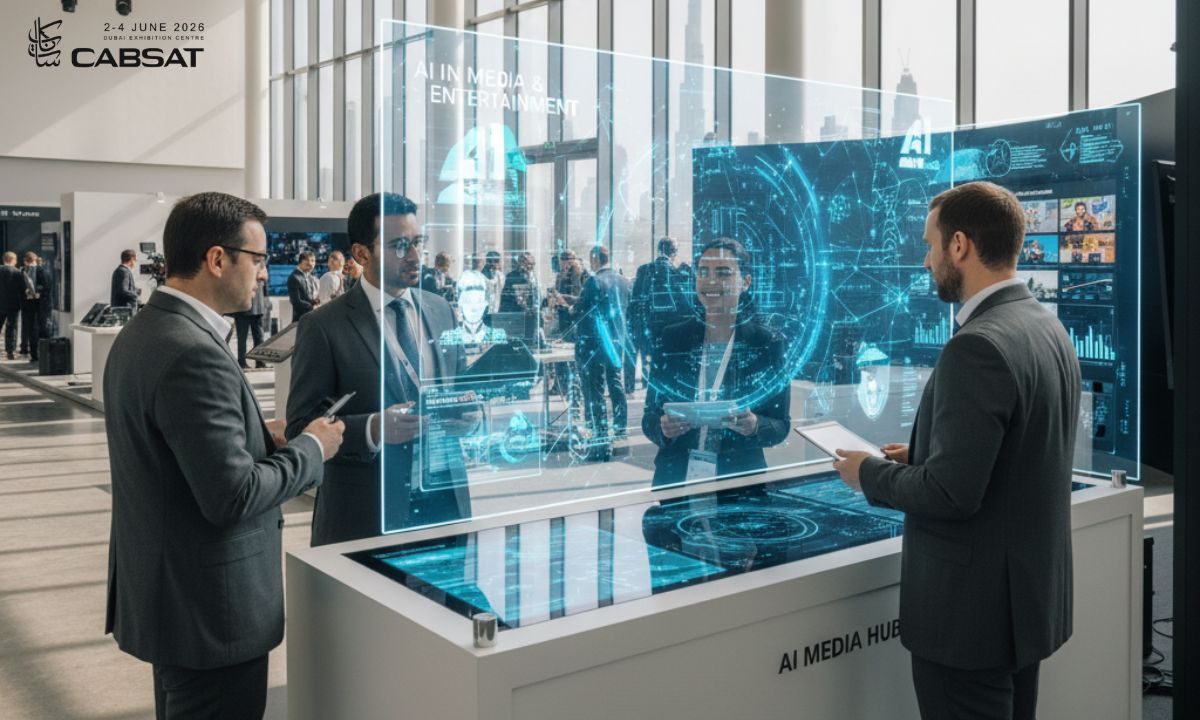
“Just add more cameras” used to be the standard fix for live television. It is not good enough anymore. The teams that win now align editorial judgement with machine intelligence, and they design their stacks so content moves quickly and measurably. That is where AI in broadcast actually delivers value. Recent industry developments show how AI-powered breakthroughs and next-generation technologies are accelerating innovation across the sector, with platforms like CABSAT highlighting how automation, machine learning, and cloud workflows are reshaping media operations.
Current AI Applications Transforming Television Broadcasting
1. Automated Live Production Systems with Real-Time Analytics
I use automated galleries to keep crews lean without lowering the editorial bar. The payoff comes when vision-mixing, graphics, and ad triggers are all informed by real-time analytics. As Ross Video explains, integrating live data into the production stack tightens turnaround and lifts engagement in dynamic formats like sport. In practice, this means data-driven lower thirds, heat maps, and predictive replays surfacing at the exact moment they matter. Less fiddling. More signals.
- Rules-based automation for cameras, graphics, and stingers tied to live data feeds.
- Editorial presets that operators can override in a click when the story turns.
- Cleaner handoffs to playout and OTT with consistent, machine-readable cues.
2. AI-Powered Camera Tracking and Quality Control Systems
Computer vision now tracks players, presenters, and panels with impressive steadiness. I treat it as an augmented craft rather than autopilot. AI-driven QC watches the same feed and flags issues before the audience sees them. That dual layer preserves quality at speed. Edge cases still need human eyes, of course. But the baseline is higher.
- Autonomous framing for fast action, reducing missed moments in live sport.
- Continuous QC for artefacts, loudness drift, and colour space mismatches.
- Less manual camera choreography in cramped galleries and OB vans.
3. Automated Captioning and Subtitle Generation Tools
Live captioning has shifted from a compliance nuisance to a growth lever. ASR-first pipelines deliver captions in seconds, then editors spot-correct for premium slots. That balance of machine speed and human polish works. Viewers in noisy environments benefit as much as those with hearing loss. It is accessible and reaches the same workflow.
| Capability | Result |
|---|---|
| ASR-driven live captions | Near-instant subtitles for breaking formats and pressers |
| Technical checks (reading speed, sync) | Broadcast-grade legibility without post bottlenecks |
| Neural translation pass | Scalable localisation for regional playouts |
4. Intelligent Metadata Tagging and Content Indexing
Good television dies in bad archives. I consider metadata a production asset, not an afterthought. AI adds timecoded tags at ingest, which turns “that great clip” into a 3-second search. It also hardens compliance and rights checks. The commercial impact is plain: consistent tags improve discovery and monetisation opportunities across FAST, AVOD, and social cutdowns.
- Timecoded people, places, and moments fuel promo and syndication.
- Unified business and technical metadata makes MAM searches actually useful.
- Cleaner lineage supports audits and reduces duplicate edits.
5. Voice Recognition and Natural Language Processing Features
Voice interfaces and NLP are moving from “nice demo” to daily tools. Transcripts feed highlights, intent detection powers smart search, and entity extraction keeps rundowns tidy. The rise of edge models helps with low-latency control in studio devices. It is basically orchestration for words as data.
- Multi-turn dialogue handling in assistants for surface-level production queries.
- Knowledge graph links between segments, guests, and storylines.
- On-device processing for faster, private interactions on set.
6. Real-Time Translation and Multilingual Broadcasting Capabilities
Multilingual playout is shifting from special case to standard. By 2026, AI-supported translation and subtitling are expected to streamline live operations and improve viewer experience across markets, as Newscast Studio reports. The editorial upside is obvious: one production, many language surfaces, no duplicate shoots.
- Low-latency caption and audio description paths for international feeds.
- IP-friendly integration for hybrid SDI and cloud control rooms.
- Unified QA lists to keep nuance intact across locales.
Machine Learning Solutions for Broadcast Media Workflows
1. Predictive Analytics for Audience Engagement and Scheduling
Predictive models help me pick not only what to run, but when and where. Roughly speaking, the best stacks combine historical EPG performance, social signals, and live tune-in curves. The goal is not blind optimization. It is editorial judgement, informed by probabilities, to place stories in the path of likely attention. I have seen it lift retention on fragile dayparts.
- Forecasted segment performance for flexible running orders.
- Heat maps of peak minutes to schedule promos with intent.
- Human override is always on. Algorithms advise, producers decide.
2. Automated Video Editing and Post-Production Tools
Auto-assembly tools handle first cuts, b-roll selection, and texted captions for social. Editors regain hours. They spend it on story, pacing, and colour. AI can even draft titles and descriptions that test well, then the team sharpens the voice. Quality rises because the drudgery falls away.
“Automation should collapse busywork so craft gets the oxygen.”
3. Smart Reframing for Multi-Platform Content Distribution
One master. Many formats. Smart reframing centres faces and on-screen text while shifting 16:9 to 9:16 or 1:1. No reshoot. No awkward crops. I treat it as mandatory for vertical platforms. It keeps the brand coherent and the message intact across surfaces.
- Auto detect action and lower thirds to preserve meaning in tall video.
- Batch outputs for TikTok, Instagram, and YouTube Shorts.
- Editorial review on hero clips only to maintain tone.
4. AI-Enhanced Audio Processing and Sound Enhancement
Sound still decides whether viewers stay. AI denoise, dialogue isolation, and loudness normalisation now run in near real time. That reduces post friction and raises consistency across live and VOD. Semi-pro contributors can reach broadcast clarity with guided presets. The floor comes up without capping the ceiling.
- Real-time mix assist in galleries for cleaner handoffs.
- Adaptive profiles for venues, studios, and remote guests.
- Accessibility lifts through clearer dialogue and steady levels.
5. Intelligent Archive Management and Content Discovery Systems
MAM and DAM are no longer passive shelves. With machine learning in broadcast media, archives behave like living catalogues. Auto-generated tags feed promo search, and storyline graphs connect characters and themes across seasons. Researchers stop trawling. Producers start creating.
| Archive Upgrade | Operational Effect |
|---|---|
| AI tag at ingest | Search in seconds, not hours |
| Entity linking | Faster story packages and retrospectives |
| Rights metadata | Fewer clearance delays and takedowns |
Future-Ready AI Technologies for Content Creation
Generative AI for Script Writing and Story Development
Generative models are best treated as collaborators, not auteurs. I use them to outline beats, surface references, and suggest alt-lines for promos. Then writers refine for subtext and voice. The result is faster development without the paint-by-numbers feel. There is a risk of average outputs if prompts drive the show. Guardrails and taste still matter.
- Rapid treatment drafts that speed approvals.
- Character and world bibles built from existing canon for continuity.
- Red-team passes to avoid cliche and bias sneaking in.
AI-Assisted Virtual Production and LED Volume Walls
Virtual production moves cost left, into previsualisation and on-set control. LED volume walls with real-time rendering let directors see the final shot as they frame it. No green spill. Fewer pickups. It produces consistent lighting and credible vistas while cutting travel and weather delays. Good for budgets. Better for schedules.
- Motion capture syncs action with environments in camera.
- Live parallax and light playback sell realism to the lens.
- Remote art teams iterate sets while talent stands by.
Personalised Content Recommendation Engines
Recommendation is not just for streaming menus anymore. In AI in broadcast, personalisation guides promo placement, start tile choices, even push alerts for breaking clips. Companies that excel in personalisation generate 40% more revenue from those activities, and 71% of consumers now expect tailored interactions, as McKinsey & Company highlights. The editorial implication is practical: promote the right segment to the right viewer at the right time.
- Reinforcement learning tunes slotting and sequence in real time.
- Contextual signals stop recommendations feeling creepy.
- Clear opt-outs maintain trust without tanking engagement.
Interactive and Dynamic Advertising Integration
Ad tech is finally catching up with attention patterns. Dynamic creatives adapt based on context and viewer behaviour. Pause ads and shoppable overlays turn passive minutes into outcomes. I like to wire SCTE-35 markers precisely so AI can swap versions without breaking editorial flow. It respects the programme while serving the business.
- QR and remote controls that convert interest into action in a click.
- Creative variants tested live, then rolled network-wide.
- Brand safety checks upstream to prevent jarring adjacencies
Sustainability Benefits Through Remote Production Solutions
Remote production reduces trucks, travel, and idle power. It also broadens hiring, since talent can contribute from anywhere. Automation in control rooms, plus centralised comms and replay, keeps quality high without sending a convoy to every venue. The carbon and cost gains align. Viewers notice none of it, which is the point.
- Central switching and comms with resilient IP paths.
- Cloud replay and graphics with on-prem fallbacks for resilience.
- Fewer site dependencies, tighter strike times, steadier budgets.
The AI-Powered Future of Broadcasting
I expect two shifts to define the next phase. First, artificial intelligence in broadcasting becomes invisible infrastructure. Editorial teams speak in outcomes, and the stack arranges itself. Second, ai-driven content creation spreads beyond promos into formats that respond to audience inputs in real time. Not gimmicks. Genuine co-authorship within guardrails.
There are constraints. Bias audits must mature. Model observability must be routine. Unions and guilds deserve clear red lines and fair compensation for training data. But the arc is clear. When AI in broadcast is paired with taste, ethics, and strong product thinking, the work improves. So does the business.
- Invest in metadata discipline. It compounds across years.
- Keep a human in the loop for creative and compliance calls.
- Measure latency, QoE, and cost per minute. Then iterate.
One editor, one producer, one machine that never sleeps, and a plan. That is the future that works.