

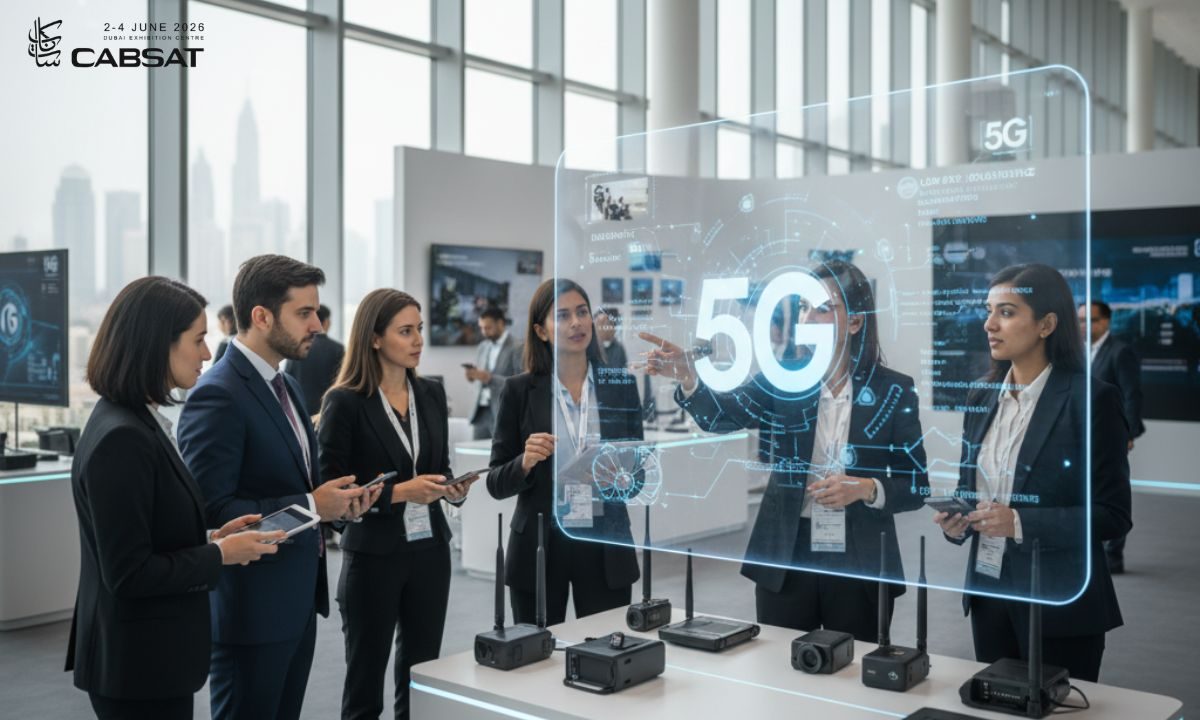
Broadcast is supposed to be simple: one signal, many viewers, zero drama. That old comfort is fading fast. I see 5G broadcasting reshaping live production not with buzzwords, but with pragmatic gains in reach, reliability, and cost control. It is basically a broadcast-grade toolset riding on cellular-grade agility. The result is a production model that can scale up for a stadium or spin up for a street interview. And yes, it is changing how content is captured, switched, and delivered in real time.
Key Applications of 5G Broadcast Technology in Live Broadcasting
Live Sports Events Streaming with Ultra-Low Latency
Sports are relentless on latency and resilience. With 5G broadcasting, I can move contribution feeds over private or dedicated spectrum and keep delays in the single-digit millisecond range. As CloudRAN AI reports, private 5G trials have delivered 5-10 ms streaming, which is the difference between a goal seen live and a spoiler. In practice, private networks also tame cell-site congestion, so a crowded arena does not drown the uplinks. That stability unlocks cleaner remote production, fewer OB trucks, and faster camera redeployments mid-match.
- Pop-up private cells for guaranteed uplink during peak crowd load.
- Bonded 5G paths as insurance for primary fibre backhaul.
- Edge switching to trim round trips for replay and graphics.
Emergency Alert Broadcasting Systems
Public warning works best when it behaves like a broadcast, not like a best-effort text. 5G broadcasting applications extend alerting with one-to-many delivery that does not depend on user subscriptions. The model supports layered authority, geo-targeting, and resilient fallbacks. In a mixed cellular and broadcast footprint, alerts arrive consistently even when networks are congested. That is the critical point. Reach and determinism over raw throughput.
Music Concerts and Entertainment Events Distribution
Concert production is a cabling hassle. 5g broadcast technology reduces the rig. Wireless cameras feed a cloud switch, while a broadcast or multicast downlink can serve on-site screens and remote fans together. Real-time fan features become feasible: selectable angles, live polls, and AR overlays. The creative team gets freedom to roam. The technical team gets fewer failure points. Everyone gets a more elastic show.
News Coverage and Real-time Reporting
For breaking news, setup time is everything. I can shoulder a compact encoder, push over 5G broadcasting uplinks, and have the newsroom cutting shots within minutes. The downlink side can also light up phones in a crowd without crushing unicast capacity. That is a quiet revolution for public interest moments, where demand spikes and patience vanishes.
Remote Production Workflow Enhancement
Remote production lives or dies by predictable bandwidth. With 5G broadcasting in the mix, I shift more sources to IP, centralise switching, and move lower-stakes roles off site. The gains stack up: less travel, leaner crews, and faster edits in the cloud. Here is why that matters. A regional event that never justified a full OB footprint now clears the bar on quality and budget.
- Higher camera count without adding trucks or long runs of fibre.
- Cloud multiview and graphics with near-real-time operator feedback.
- Consistent links in tough RF environments using managed spectrum.
Multi-Camera Angle Broadcasting for Immersive Viewing
Multi-angle is not a novelty anymore. It is a habit. 5G broadcasting supports parallel contribution and efficient distribution, so viewers can jump perspectives without buffering. UHD feeds, spatial audio, and companion data ride together. Add a low-latency backchannel and producers can nudge viewers to key angles at decisive moments. Small cue, big lift in engagement.
5G Broadcast Standards and Infrastructure Requirements
3GPP Release 19 Standards Implementation
Standards are the bedrock. Release 19 sits in the 5G-Advanced arc and tightens radio, core, and service layers for broadcast-grade delivery. As 3GPP details, the work extends mobile broadband, leans into non-terrestrial links, and readies features that set the runway for 6G. For broadcasters, that means more efficient multicast, better mobility handling, and smarter device power use. Not glamorous, but decisive.
| Area | What improves |
|---|---|
| Radio Access | Stability for high-density venues and moving cameras. |
| Core Network | Multicast control and session reliability for one-to-many flows. |
| Service Layer | Cleaner APIs for apps that blend linear and interactive elements. |
Broadcast Bands 112 and 113 Spectrum Allocation
The broadcast needs the right physics. The sub-1 GHz spectrum carries well indoors and across distances. As 5GBC notes, 3GPP standardized Band 112 and Band 113 in the UHF range for 5G broadcast standards, aligning with long-standing TV allocations. This is more than housekeeping. It anchors coverage planning, antenna design, and receiver expectations for wide-area services.
High-Tower-High-Power Transmitter Networks
High-Tower-High-Power remains attractive for blanket reach. One tall site can flood a large market with a robust downlink, especially in rural or mixed terrain. I would pair that with gap fillers or small cells in denser zones. The hybrid solves two problems at once: city capacity and countryside coverage. It is a practical balance, not a purity test.
Device Compatibility and Chipset Requirements
Receive-only modes and dedicated broadcast receivers in handsets are essential for full 5G broadcasting benefits. Industry initiatives such as the 5G broadcast certification platform launched by TDF aim to accelerate device compatibility and standardise FTA mobile TV reception across new chipsets. As EBU explains, many current smartphones lack the hardware for direct 5G broadcast reception, so future chipsets and software stacks must add these paths. That includes RF front-ends for the approved bands and OS hooks for linear and interactive services.
- Chipset support for broadcast bands and receive-only modes.
- Battery-aware demodulation so live channels do not drain devices.
- Consistent middleware to expose EPG, captions, and interactivity.
FeMBMS Technology Integration
FeMBMS brings multicast efficiency into the 5G toolkit. I see it as the hinge between classic broadcast and flexible IP delivery. Operators can light up a single stream that many devices receive, cutting duplicate traffic and smoothing peak loads. For events, that means steadier quality when interest surges and fewer unicast failures. The engineering is subtle. The viewer benefit is obvious.
Overcoming 5G Broadcast Challenges and Market Adoption
Device Availability and Commercial Receiver Development
Hardware availability is the gating factor. Prototype phones prove the path, but broad adoption needs a consistent receiver profile and modem support from major vendors. The ecosystem is aligning, though timelines will differ by region and business case. My take is simple. Once two flagship tiers embed broadcast reception, content teams will retool fast.
- Align broadcasters, chipset makers, and MNOs on receiver specs.
- Offer developer kits so app teams build the new pipes early.
- Prioritise emergency alerts and live sports to showcase value.
Indoor Signal Attenuation Solutions
Indoor coverage is the quiet deal-breaker. Modern construction blocks RF aggressively. The remedy is layered: small cells for capacity, DAS for deep coverage, and careful planning around UHF broadcast bands for reach. Signal boosters help in specific sites, but they are stopgaps. The scalable answer is design, not heroics.
- Strong venues use a mix of UHF broadcast for reach and targeted in-building systems for quality where crowds gather.
Network Infrastructure Investment Requirements
Costs shift rather than vanish. 5G broadcasting trims OB spend, reduces fibre runs, and leans on software switching. But it asks for spectrum planning, encoder upgrades, and integration work. The capex story improves when fleets are shared across events and when remote production replaces travel. Pay once, save often.
- Shared private 5G kits amortised over a dense events calendar.
- Cloud production to convert fixed costs into controlled usage.
- Training budgets that unlock the real ROI of new workflows.
Regulatory Framework Development
Spectrum and safety drive policy. Regulators must align allocations, support trials, and ensure public warning can ride broadcast paths reliably. Industry, to an extent, must meet them halfway with interference studies and coexistence tooling. Harmonisation pays off. Fewer device variants. Faster scale.
Integration with Existing Broadcasting Systems
Brownfield wins beat greenfield fantasies. I integrate 5G broadcasting with SDI, NDI, and ST 2110 paths, then fold control into the same MAM, NRCS, and playout stacks. Contribution over 5G, switch in the cloud, distributed via broadcast and IP. And yet, I keep a firmware-agnostic posture. Standards evolve, but content libraries should not be trapped.
Pros vs Cons: 5g broadcast vs traditional broadcasting
- Pros: Flexible deployment, lower on-site overheads, scalable one-to-many delivery, richer interactivity.
- Cons: Device readiness lag, regulatory variance, integration complexity in legacy chains.
The Future of 5G Broadcasting Technology
The direction of travel is clear. Broadcast-grade coverage meets app-grade interactivity. Expect smarter networks that switch between unicast and multicast based on demand, and devices that cache segments locally for instant start. I also expect more venue-first designs: stadiums, arenas, festivals with dedicated slices and seamless fan apps. Critics say it is a niche. They miss the compounding effect when capture, switch, and serve all get simpler.
Two priorities stand out. First, push receiver support into mainstream phones and set-top devices. Second, design content for the medium, not just the pipe. Multi-angle by default. Data-rich by design. Frictionless for editors and fans. That is how 5g broadcasting moves from pilot to practice.